Technical resource
GHK-Cu vs AHK-Cu for Cosmetic Formulation: A Technical Comparison
仅凭商品名选择铜肽可能会导致错误的序列、盐形式或配方筛选。
GHK-Cu 与 AHK-Cu 化妆品配方决策不仅仅取决于市场宣传的比较。配方师需要将所提供的原料与成品简介、质量文件和预期开发路线相匹配。这意味着要检查肽的种类、化学形式、活性成分、pH 环境、加工条件、包装以及所提供等级的现有证据。
然而,GHK-Cu 和 AHK-Cu 虽然都是相关的铜肽概念,但不应被视为可互换的原料。产品名称相同并不意味着它们的序列、盐型、含量测定标准或应用范围相同。因此,研发、质量保证和采购团队在批准样品或询价之前,应在原料层面进行对比。
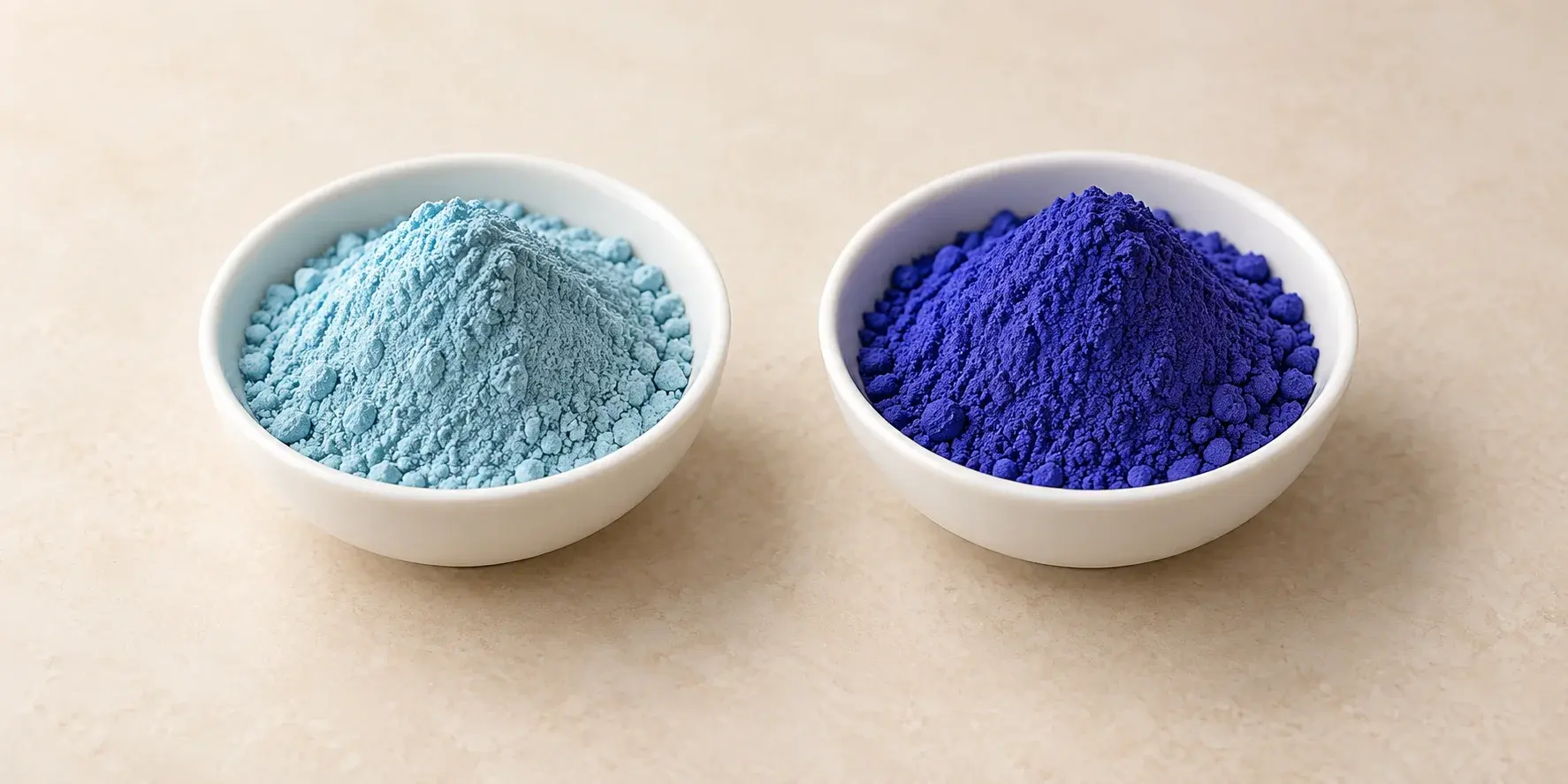
本文为化妆品配方师提供了一个技术比较工作流程,涵盖成分鉴别、命名、配方筛选、质量文件、稳定性问题以及与供应商沟通等方面。本文并未对任何一种肽进行优劣排名,也未将成分信息转化为最终产品的临床或医学声明。
配方师在选择铜肽之前需要比较哪些因素?
有效的对比分析应从产品简介入手,而非成分名称。在供应商寄送样品之前,务必记下配方格式以及判断该材料是否适用的条件。
定义成品格式
记录项目产品的形式,例如透明精华液、凝胶、乳液、头皮爽肤水、喷雾或其他免洗型产品。每种形式都有不同的限制。透明精华液可能需要低浑浊度和严格的溶解度控制。乳液可能会使肽暴露于热、乳化剂、电解质以及更复杂的界面中。头皮喷雾则需要考虑粘度、过滤、喷嘴性能以及包装接触等问题。
接下来,记录目标pH值、加工温度、添加阶段、防腐体系、包装、预期保质期研究以及外观要求。如果简报中只写着“精华液需添加蓝色活性成分”,则信息不够具体,无法进行有效的供应商比较。团队还需要了解产品是否透明、有色、添加香料、采用无氧包装或会反复开启。
将商业问题与技术问题分开
采购部门可能会询问哪些材料能够以所需数量供货。研发部门可能会询问哪些材料可以在预定的环境中进行筛选。质量保证部门可能会询问鉴定和放行文件是否支持审批。这些问题相互关联,但一份报价单无法解答所有问题。
例如,较低的报价并不能弥补批号缺失、盐型不明确或载体不兼容等问题。同样,如果供应商无法提供待发货材料的最新规格、安全数据表 (SDS) 和批次特定的分析证书 (COA),那么即使技术上很有价值,样品也无法立即购买。可靠的决策应同时考虑项目契合度和文件契合度。
使用物料级鉴定清单
在比较性能之前,请供应商提供以下信息:
- 确切的产品名称和产品代码
- 肽序列或身份参考
- 盐、络合物、水合物或载体形式
- 目的地市场使用的INCI名称或当地名称
- CAS 或其他身份参考信息(如适用)
- 粉末、冻干粉、溶液或载体形式
- 肽测定或含量测定
- 相关铜含量测定方法和结果
- 储存、运输和包装条件
这些字段可以避免常见的采购错误:将两份使用类似“铜肽”措辞但描述不同材料形态的文件进行比较。如果供应商使用商品名,则应在文件中保留商品名,但同时也要记录其对应的成分和等级。
GHK-Cu 和 AHK-Cu 不能互换使用。
GHK-Cu 与 AHK-Cu 化妆品配方比较中最重要的区别在于其成分。铜肽的比较应从序列、化学形式和规格等方面入手。仅凭“铜三肽”这样宽泛的标签不足以证明二者等效。
GHK-Cu:确认所提供的参考文献
GHK-Cu 常与铜三肽-1 (Copper Tripeptide-1) 一起出现在化妆品文献和供应商资料中。该名称有助于买家进行初步的身份识别,但仍需与实际产品代码、剂型和供应商提供的最新文件进行核对。数据库名称或文献术语不能替代所提供原材料批次特定的身份信息。
例如,对于GHK-Cu样品,请索取序列号或鉴定参考信息、标明的剂型、含量测定依据以及供应商使用的分析方法。如果样品为粉末,请确认结果是基于供货情况还是其他依据。如果是溶液或载体体系,请记录活性成分浓度和所有重要的辅料。
AHK-Cu:核实名称、盐型和市场状态
AHK-Cu 需要进行单独的鉴别。请勿直接将 GHK-Cu 的名称、CAS 参考号或 INCI 命名法复制到 AHK-Cu 的规格说明中。AHK-Cu 可以用特定的盐型来描述,所提供的盐型必须与样品标签、TDS、SDS 和 COA 中的盐型一致。
目前 Cosveta 的参考资料中讨论了 AHK-Cu 盐酸盐形式,并列出了该形式的候选 CAS 参考编号。该信息仅作为文件审查的起点,并非适用于所有 AHK-Cu 产品的通用声明。在发布、进口或进行特定市场标签标注之前,请务必根据供应商的现有文件和目标市场的要求,确认确切的剂型和名称。
为什么序列和盐型会影响比较结果
Sequence affects the identity evidence a laboratory should request. Salt or complex form affects molecular basis, documentation, handling and the way a result is expressed. A sample that contains a carrier, counter-ion or different concentration basis cannot be compared fairly with a neat powder simply because both are described as copper peptides.
For a public identity reference, a buyer can consult the PubChem Copper Tripeptide-1 record. The record provides chemical context for GHK-Cu discussions; it does not verify the batch offered by a supplier and should not be applied automatically to AHK-Cu.
For cosmetic naming and market review, consult the European Commission CosIng database alongside the supplier file. A public database can support an identity question, but it does not replace the current specification, TDS, SDS or lot-specific COA for the material being purchased.
GHK-Cu vs AHK-Cu: comparison points for formulators
| Review point | GHK-Cu | AHK-Cu | What the buyer should verify |
|---|---|---|---|
| Identity reference | Often discussed with Copper Tripeptide-1 | Requires its own sequence and form review | Match the exact product code, sequence and supplier documents |
| Chemical form | May be supplied as a defined peptide-copper complex, powder or solution grade | May be supplied in a stated salt form, including a hydrochloride form | Confirm salt, carrier, concentration basis and active basis |
| Typical first-screen direction | Skin-focused serum, gel or cream concepts | Scalp serum, tonic or other targeted topical concepts | Use the project brief; do not treat the direction as a performance guarantee |
| Formulation checks | Dissolution, clarity, pH, color, chelators and cool-down addition | Solubility, pH, sprayability or viscosity, color, chelators and package contact | Test the offered grade in the complete base |
| Identity evidence | Sequence or identity reference plus HPLC/LC-MS information where applicable | Sequence, salt form and HPLC/LC-MS information where applicable | Ask which method and reference standard support the result |
| Copper measurement | Request the relevant copper-content method when the specification requires it | Request the relevant copper-content method for the offered form | Do not treat copper content as the same result as HPLC purity |
| Main limitation | Literature or a typical TDS cannot prove finished-formula performance | Naming and salt-form assumptions can create an identity mismatch | Use sample testing, current documents and market-specific review |
The table is a screening framework, not a universal product specification. The actual grade, concentration, carrier, document revision and destination market determine the final approval route.
How application fit changes the screening plan
Once identity is clear, compare the materials by the work they must perform in the formula development process. A GHK-Cu vs AHK-Cu cosmetic formulation decision should answer: “Which material can we evaluate responsibly in this brief, and what evidence will we need before release?”
Skin-focused serum and gel concepts
In practice, a water-based facial serum often places the most pressure on dissolution, clarity, color and pH. The formulator should prepare a small screen that records water quality, premix time, addition temperature, pH adjustment, buffer salts, polymer system and final appearance. A clear result at the bench is useful, but it does not remove the need for stability and package testing.
GHK-Cu may be a direct starting point for this type of skin-focused screen when the supplied grade and project brief support it. However, “starting point” does not mean “approved for every serum.” The team still needs to confirm the current TDS, test the actual grade and document the finished formula’s behavior.
Scalp serum, tonic and spray concepts
By contrast, scalp products introduce their own practical questions. A tonic or spray may need a narrower viscosity range, a filtration step, a specific nozzle and low residue on application. The team should also check fragrance, alcohol, preservative and electrolyte interactions before it compares samples.
AHK-Cu can be evaluated in a scalp-care development route when the identity and supplier documentation support the project. The article should describe this as an application concept, not as proof of hair growth or treatment. Cosmetic communication should stay within the evidence available for the finished product and destination market.
Emulsion creams and lotions
In a cream, the material may experience a heated oil phase, emulsifier system, electrolyte load and cool-down stage. The test plan should show where the peptide enters the process and whether the final pH, color, viscosity and assay remain acceptable. A material that dissolves in water may still behave differently after the emulsion is built.
For this reason, compare copper peptides inside the full formula rather than in water alone. Include a blank base, a controlled sample and a retain sample. If the formula changes color, first measure pH and inspect the container before deciding that the raw material itself is the only cause.
What to request from the supplier before approving a sample
In practice, a supplier comparison becomes useful when every candidate is asked for the same technical file. The documents do not need to look identical, but they should answer the same decision questions.
Specification and identity records
- Product code, exact name and supplied form
- Peptide identity or sequence reference
- INCI/local name and CAS reference where applicable
- Assay, peptide content and copper-content definitions
- Appearance, moisture, microbiological and contaminant limits where relevant
- Test methods, units, reporting basis and acceptance limits
COA, TDS and SDS
A COA should identify the tested lot and distinguish specification limits from actual results. A TDS should describe the material, format, handling and formulation starting points. An SDS should support hazard communication, storage, handling and emergency review. None of these documents proves finished-product performance on its own.
For a broader document workflow, use Cosveta’s cosmetic ingredient COA, TDS and SDS review guide. For a GHK-Cu or AHK-Cu file, add the sequence, salt form, active basis and copper-content method to the checklist.
Storage, shipping and change control
Record the recommended storage condition, packaging, resealing instructions, shipping exposure and retest or shelf-life language. If the supplier gives a preliminary or representative value, label it that way. A typical result cannot be treated as a release commitment for a future bulk lot.
Also ask how the supplier communicates changes to sequence, salt form, site, process, carrier, specification or packaging. Change control matters because a new document version can alter the formulation screen even when the trade name remains unchanged.
Build a decision workflow for R&D, QA and procurement
The strongest copper peptide comparison is a shared workflow. It lets each team make its own decision without losing the link between technical fit and commercial risk.
Stage 1: write the project brief
State the finished-product format, target pH, process temperature, package, destination market, sample quantity, estimated volume and required documents. If the formula is a scalp spray, say so. If the formula must remain clear, record that as an acceptance criterion rather than a preference.
Stage 2: screen identity and documents
Compare the quotation, sample label, TDS, SDS and COA. Confirm that they describe the same product code, sequence, form and grade. Stop the comparison if one document describes a different carrier, salt or concentration basis.
Stage 3: run a controlled sample screen
Use the same base, process and observation points for each candidate. Record dissolution, pH, color, odor, viscosity, filtration, container contact and any visible change. Avoid changing several variables at the same time because that makes the result difficult to interpret.
Stage 4: plan stability before making a commercial decision
Select real-time, accelerated, light, freeze-thaw or transport checks according to the product risk. Define what will be measured and what result would trigger reformulation or a new sample. An accelerated screen can reveal a risk; it does not automatically establish the final shelf life.
Stage 5: approve the material and quotation together
QA should approve the document set, R&D should record formulation fit and procurement should confirm the commercial conditions. The decision record should state the approved product code and form. It should also identify the documents required for each future lot.
GHK-Cu vs AHK-Cu selection matrix
| Project question | Start with GHK-Cu when… | Start with AHK-Cu when… | Evidence required before approval |
|---|---|---|---|
| The brief is skin-focused | The team is screening a peptide-led serum, gel or cream concept | The team has a documented reason to evaluate AHK-Cu in the same format | Identity, form, sample compatibility and stability plan |
| The brief is scalp-care | GHK-Cu is being evaluated for a conditioning concept | The project is specifically screening an AHK-Cu scalp serum, tonic or spray route | Identity, spray/viscosity checks, claim review and package test |
| The formula is clear | The supplied grade passes a controlled dissolution and clarity screen | The supplied form and process pass the same clarity criteria | Premix record, pH, appearance, filtration and retain sample |
| The document set is incomplete | Do not approve until the missing identity or lot evidence is resolved | Do not approve until the salt form and lot evidence are resolved | Current specification, TDS, SDS and lot-specific COA |
| The buyer is comparing quotations | Compare the exact grade and active basis, not only price per kilogram | Compare the exact salt/form and active basis, not only the trade name | Product code, packaging, lot documents, terms and change-control route |
This matrix keeps the selection decision tied to the project brief. It does not claim that one peptide is universally superior. The correct starting material depends on identity, grade, formulation conditions, evidence and the intended cosmetic communication.
Common mistakes in a GHK-Cu and AHK-Cu comparison
Using one HPLC result as the whole quality decision
HPLC purity can be valuable, but it does not automatically answer whether the sequence is correct, how much peptide is present on the stated basis or how much copper is present. Ask what each result measures and how the method applies to the offered form.
Copying GHK-Cu naming into an AHK-Cu file
Similar terminology creates a real procurement risk. Keep the two identity files separate. Confirm AHK-Cu naming, salt form and market status from the actual supplier documentation before the material enters a specification or label review.
Assuming a water solubility statement proves formula compatibility
Water solubility does not predict every pH, buffer, polymer, preservative, electrolyte or packaging outcome. Use the TDS as a starting point, then test the material in the intended base.
Turning research into a finished-product claim
Published studies can help a team understand research context. They do not establish the identity of a purchased lot or prove the performance of a finished cosmetic product. The PubMed copper tripeptide search is useful for reviewing study design and material descriptions, not for replacing formulation evidence.
Comparing price before comparing the specification
A quotation is only comparable when the material form, active basis, packaging, documents and delivery conditions are comparable. Otherwise, a low price may reflect a different concentration, carrier, grade or document scope.
Frequently asked questions
Are GHK-Cu and AHK-Cu interchangeable in a cosmetic formula?
No. Treat them as different raw materials until the sequence, chemical form, salt form, specification and formulation behavior have been reviewed. A similar trade description does not establish equivalence.
Which copper peptide should I use for a facial serum?
GHK-Cu may be a practical starting point for a skin-focused serum screen when the offered grade matches the brief. The final choice still depends on identity, clarity, pH, compatibility, stability and the claims permitted for the finished product.
Which copper peptide should I use for a scalp serum?
AHK-Cu can be evaluated in a scalp-serum or tonic development route when its identity and salt form are clear. GHK-Cu may also be screened for scalp-conditioning concepts. Neither choice supports an automatic hair-growth or treatment claim.
Does 98% HPLC purity prove the copper content?
No. HPLC purity, peptide content and copper content are separate measurements. Request the method, unit, basis and acceptance limit for each result that matters to the material specification.
What should I request before approving a copper peptide sample?
Request the exact product code, sequence or identity reference, salt/form information, current specification, TDS, SDS, lot-specific or clearly labeled representative COA, storage guidance, copper-content method and any available compatibility or stability information.
Can I use a public database record as the product specification?
No. Public databases provide identity or research context. The supplier’s current specification and lot documents control the review of the offered material, while the buyer’s formulation and destination-market requirements control the final application decision.
What information should I include in a sample request?
Include the selected peptide, product format, target pH, process temperature, package type, sample quantity, destination country or region, required documents and expected annual volume. This gives the supplier enough context to propose a grade and document set for review.
Summary: choose the material that fits the evidence and the formula
If the problem is uncertainty about GHK-Cu vs AHK-Cu cosmetic formulation, start with identity and the finished-product brief. Confirm the sequence, salt form, active basis and document scope before comparing a sample. Then run a controlled screen that measures the variables most likely to affect the formula: dissolution, pH, color, temperature exposure, chelators, packaging and stability.
GHK-Cu 可作为某些针对皮肤的精华液、凝胶或乳霜产品的初步筛选标准。如果产品形式和相关文档支持,AHK-Cu 可用于评估针对特定部位的局部护理或头皮护理产品。此对比并非旨在得出普遍适用的最佳方案,而是提供一个可供研发、质量保证和采购部门共同审核的初步决策。
如需了解 Cosveta 目前的铜肽产品组合,请查看GHK-Cu / AHK-Cu 产品页面、质量和文档页面以及化妆品成分应用页面。然后,请提供您的目标规格和所需文件清单,并索取样品和报价。
下载清单:批准样品前,记录标识、形式、序列、活性成分、HPLC/LC-MS 信息、铜含量测定方法、pH 值筛选、加工温度、包装、COA 状态、TDS、SDS 和下一位审核人。